• Home
  • About Me
  • Videos and Teachings
  • My Loves
  • Blog
Steve Squires
Follow and Reach Me

Meaning and Nature of Revelation - Bloesch's Offering

12/19/2018

0 Comments

 
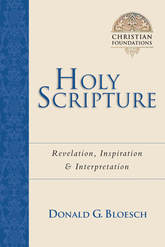
At the core of the issue of Biblical authority is the issue of revelation.  For some, Biblical authority is based solely on revelation itself.  This begs the question: what exactly is revelation?  This is the question that Bloesch deals with in his third chapter, "The Meaning of Revelation."  I'll discuss it here.

Bloesch's major concern in this chapter is to recast revelation, as he does with Scripture, as a work of the Spirit.  Therefore, owned and directed by God witnessed to in Jesus Christ.  Fairly quickly Bloesch defines revelation as "a meeting between God and the believer whereby God speaks and we hear" (49).  Bloesch states that there are two parts to revelation.  The first is the personal encounter and a the second is the impartation of knowledge, "Revelation entails both divine presence and divine meaning" (49).

Implicit (and necessary) in this definition is the idea that revelation is an event.  This event is one where God speaks and we listen; these are the two poles of revelation - the historical event and the "event of experience"  by humans (my quotations).  Here is a great quote from the chapter: "God's revelation is his commandment and his promise, and these come to us in the form of written commandments and written testimonies.  Yes they cannot be confined to what is objectively written, since their meaning-content includes their significance for those who hear God's Word in every new situation (52).  This echoes Barth (and von Balthasar's) concern that humanity doesn't own the revelation; revelation is a one-way path from God to us.  It is only God's word as it becomes God's word to us in our situation.

"Revelation and the Bible" is his next section that deals with the question of the relationship between revelation and the Bible.  A quotation summarizes his thoughts: "The bible is not in and of itself the revelation of God but the divinely appointed means and channel of this revelation" (57).  Bloesch acknowledges a relationship between God's Word and Scripture, but it would be a mistake to absolutely equate one with the other.   The Bible is not merely "stenographic notes" of God's audible Word.  They are a human witness that becomes a divine witness through the revealing action of God on writers through the Holy Spirit.  Bloesch summarizes that the Bible is an "instrumental" norm for faith, but not an "absolute norm."

 The authority of Scripture comes from the fact that it is a faithful witness to God's Word, but is not God's Word in itself or in its totality.  Scripture is one step removed from revelation, and the sermon two steps removed.  For Bloesch, the focus should be on the Spirit's task of revealing God's Word rather than on humanity's attempt or ability to understand the revelation.  "The Bible participates in the transcendent Word of God - not directly but through the Spirit of God" (70).

Bloesch does an excellent job at both affirming and protecting God's revelation from human manipulation as well as affirming and protecting humanity's involvement in the transmission of revelation for itself.  That being said, it is clear that Bloesch's concern is much greater for the former than the latter.  He does a great job at using both Scriptural and historical quotations to buttress his main point.  

One can see how some would be uncomfortable with Bloesch's position.  The primacy of the Spirit, though, cannot be ignored or pushed under the rug.  Bloesch doesn't do what rationalists do which is to write off God's revelation as myth.  He keeps his fidelity with Scripture by emphasizing God's true act in the Spirit.  He merely puts the needle where it should be: on the word of God.
​
0 Comments

Donald Bloesch - Introduction (Basis for Discussion)

12/12/2018

0 Comments

 
Picture
Bloesch starts out with a discussion of how to approach Scripture.  For him, there are three approaches.  The first is what he refers to as "evangelical rationalism."  In this approach Scripture is virtually equated with revelation.  Truth is propositional and discovered through induction. The second approach is "religioethical experimentalism."  In this approach it is human moral experience  that shapes theological understanding.  The Bible is valued "because it provides insights that elucidate the universal experience of transcendence" (18).  The third approach is "biblical evangelicalism."  This approach allows for a real knowledge of God.  This knowledge, though, is given "anew by the Spirit of God in conjunction with the hearing and reading of the Biblical message.  In this view the Bible is the divinely prepared medium or channel of divine revelation rather than revelation itself" (18).  The clear choice for Bloesch is the third.  Bloesch continues, "The Bible can certainly be conceived as the mediate source of divine revelation.  The ultimate source is then the living Christ, who speaks to us by his Spirit.  Or the Bible can be said to be the historical source of revealed truth, and Christ in his unity with the Spirit the ultimate or eternal source and ground of truth" (19).  Revelation in Jesus Christ is not identical with the written word of God.

Bloesch's third approach protects the Scripture from issues like inerrancy and infallibility.  These terms, Bloesch determines, are too rationalistic.  Rather, her refers to the Bible's reliability as an "abiding truthfulness and normativeness of the Biblical witness" (27).  It is not a property of human witness but a witness of the Spirit.  A final quote wraps us Bloesch's thought: " God's Word is absolute, but it comes to us in the form of the relative.  Through the power of the Spirit we are nevertheless placed in a relationship with the absolute, and this means that our thoughts and activities have a sure anchor in eternity.  We do not ascent to the absolute unfaith, but the absolute descends to our level" (28).

I believe that Bloesch's three approaches correctly summarize the main way people come to Scripture.  Bloesch is trying to present a middle way between the two extremes.  I appreciate his desire to make the Bible neither a  "paper pope" or subjugate the authority of Scripture to mere human understanding.

There is one area that I find problematic (and perhaps he will address this later in the book).  Bloesch essential states that Scripture is owned by the Spirit.  The challenge is that even the concept of the Spirit is misconstrued by both the evangelical rationalists and the religioethical experimentalists.  The first throttles the Spirit and the second misuses the Spirit often to justify their own agenda.  If the Spirit is the center of the nut, per se, it will be difficult for either group to be persuaded. 

Despite this challenge, I believe Bloesch provides a unique and helpful approach to understanding what is at stake with the interpretation and application of Scripture.   

​So far, so good!


0 Comments

Scripture: Investigations and Musings

12/11/2018

0 Comments

 
Picture
I have been reflecting a great deal of the doctrine of Scripture.  More specifically I have been reflecting on the authority of Scripture and the role that it plays in the church and faith formation.  I grew up evangelical (Baptist tradition).  This meant that the Bible had what I would refer to as ultimate authority.  The authority of Scripture was wrapped up in its infallibility and inerrancy.  The Bible was God's Word and it couldn't be wrong: in detail, message, or intention (purpose).  On of the most important tasks in the church was (and is in many circles)  to protect the integrity of the Bible, and by extension, its ultimate authority.  This led to much hand wringing over difficult passages that seemed to contradict scientific or historical fact.  The hand wringing led to mental gymnastics to either defend the traditional Biblical position or to downplay the contradiction as irrelevant.  Ultimately, the hand wringing or mental gymnastics only served to shake an already unstable relationship between conservative evangelicals and much of the rest of the Bible believing West (already unstable because of challenges to the Bible by the historical-critical method, developing post-modern theologies, etc.).  To oversimplify:  you believed in the Bible and its ultimate authority or you did not.  This determined whether you were a good Christian or not.  

Much of American christendom looks like this today (albeit with variations given post-modern emphasis on small "t" truth).  It seems to me that the dividing line is still Scripture and its authority or lack thereof.  Christianity's inability to solve the issue of Biblical authority is still the major issue at hand. Post-modern attacks, as I said above, on truth still have not been solved, by either a "sticking your head in the sand"  approach or a more post-modern "anything goes" approach.  To state it another way, the literalist and expressivist camps have both failed to convince anyone of their position.  The result is that those who don't find their home in either the literalist or expressivist "camp" have no home at all.  One should not underemphasize how large this group of is and how it grows daily.  I don't find myself in either camp which is what has necessitated what I am working on now.  There has to be a "via media" (as I have mentioned in a more recent blog post) that values both Scripture and human cognition without discounting one or the other.

To answer my questions (and perhaps ease my mind relative to my own faith) I have begun to dig through all of my systematic theologies, etc.  I was lucky enough to have gone to a Bible believing (almost literalist) seminary in Gordon-Conwell and a less than believing grad school in Boston University.  Both schools helped me to build a vocabulary, thought process, and library that now aids me in this journey to find the middle way.

The long and the short of it is that I have found what I believe to be the most helpful book on this topic for me: Donald Bloesch's Holy Scripture: Revelation, Inspiration, and Interpretation.  There are others that are helpful as well, but for me Bloesch has been the best resource to help me through this process.  Periodically I'll be posting here as I work my way through Bloesch's volume section-by-section.  The point isn't to affirm everything that Bloesch writes, but the engage with Bloesch from my own journey.  
0 Comments

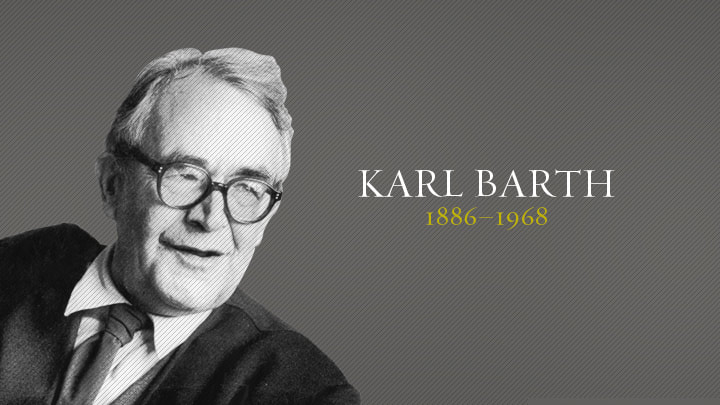
Some Reflections on Barth and Scripture

12/6/2018

0 Comments

 
Picture
Lately (actually for a while) I have been concerned about evangelicalism's conception of Scripture.  What prompted  me to finally blog about it was an article on the relationship between the Old Testament and the New Testament in Andy Stanley's thought.  This reflection is not about Andy Stanley, but to summarize Mr. Stanley believes that the covenants that God makes in the OT take a back seat to the ultimate covenant that God makes with us in Jesus Christ.  As a result of this conclusion the OT is not discarded, but relegated (my term) to a "secondary" position (again, my term).  The OT is valuable as it tells stories about God and it establishes God's relationship with it, but its historicity (or lack thereof) is of no consequence. This accomplishes what Stanley is going after, which is protecting faith from being dismantled through a systematic deconstruction of the OT.  In other words, Stanley is rejecting the long term acceptance of literalism in the evangelical tradition.

It is in this rejection of literalism that I find the connection with Barth (however strange that may seem!).  Barth rejects both literalism and expressionism for what he refers to as "realism."  This realism is a "via media" between the two.  For Barth, realism with its emphasis on analogical reference doesn't emphasize the same brand of certainty literalism.  Rejecting a prooftexting kind of certainty, Barth describes realism mode of certainty as "sufficient."  This sufficiency refers to knowing God and for salvation in Christ.  

Barth also refers to the Bible's "mode of narration."  What he primarily referring to is the story within the text (Noah, the flood, Jonah and the whale, etc.).  He sees these stories not as factual reports (like literalism) and not as mythological pictures (like expressionism) but as "legendary witnesses" (Barth's preferred reference is "saga."  Personally I find it hard to find the distinction between the two.  More reading of Barth is necessary.  I'm hoping to get Hunsinger's book Barth and Scripture for Christmas to help me understand this more fully).  These Biblical narratives function as "witnesses" to God's revelation.

The connection between Stanley's position and Barth's is interesting.  I think that Stanley is saying the same thing about the Old Testament texts: there are witnesses to revelation.  They are most certainly not to be taken literally for Stanley  this goes for Barth as well.  They seem to agree on the "mode of narration" of Scripture.  While Stanley doesn't use the term "legend" or "saga" in reference to the Old Testament text, it would seem that this is what he means.  

Does Stanley realize that he is going down a Barthian path?  He has received a lot of push back on his thesis (this can be more fully seen in his book Irresistable) from many fronts.  The pushback has come in large degree from conservative evangelicals. These evangelicals would find themselves very comfortable in Barth's category of "literalism."  Granted, Stanley position is not really as developed or nuanced as Barth's.  Nevertheless, I see Barth's concern being echoed in Stanley's thought.  
0 Comments

    Authors

    Father, Pastor, Writer

    Archives

    January 2023
    October 2022
    April 2022
    February 2022
    November 2021
    October 2021
    September 2021
    August 2021
    May 2021
    April 2021
    February 2021
    January 2021
    December 2020
    November 2020
    October 2020
    April 2020
    March 2020
    February 2020
    January 2020
    December 2019
    November 2019
    October 2019
    September 2019
    August 2019
    June 2019
    May 2019
    April 2019
    March 2019
    February 2019
    January 2019
    December 2018
    November 2018
    October 2018
    March 2018
    February 2018
    March 2017
    May 2016
    April 2016
    February 2016
    January 2016
    December 2015
    July 2015
    June 2015
    March 2015
    February 2015
    January 2015
    October 2014
    July 2014
    June 2014
    April 2014
    March 2014
    February 2014
    January 2014
    December 2013
    November 2013
    October 2013
    September 2013
    August 2013
    July 2013
    June 2013
    May 2013
    April 2013
    March 2013
    February 2013

    Categories

    All
    Barth
    Bible
    Bi-polar
    Books
    Church
    Discipleship
    God
    Leadership
    Missions
    Music
    Outreach
    Prayer
    Running
    Scripture
    Sermon
    Sermons
    Spiritual Disciplines
    Spiritual Disciplines
    Spotify
    Technology
    Theology
    Triathlon
    Worship

    RSS Feed